
A dependable work light should do more than simply produce bright illumination. It should stay stable, reach the right working height, cover a useful area, withstand demanding environments, and remain practical to move from one task to another. A well-designed Tripod LED Work Light brings these requirements together in one portable lighting solution.
Why a Tripod Design Matters
Lighting a work area sounds simple until the job actually begins. A handheld lamp occupies one hand, a floor-level light creates long shadows, and a light placed on an unstable surface can easily be knocked over. These problems become particularly frustrating when workers need both hands for installation, repair, painting, drilling, inspection, or assembly.
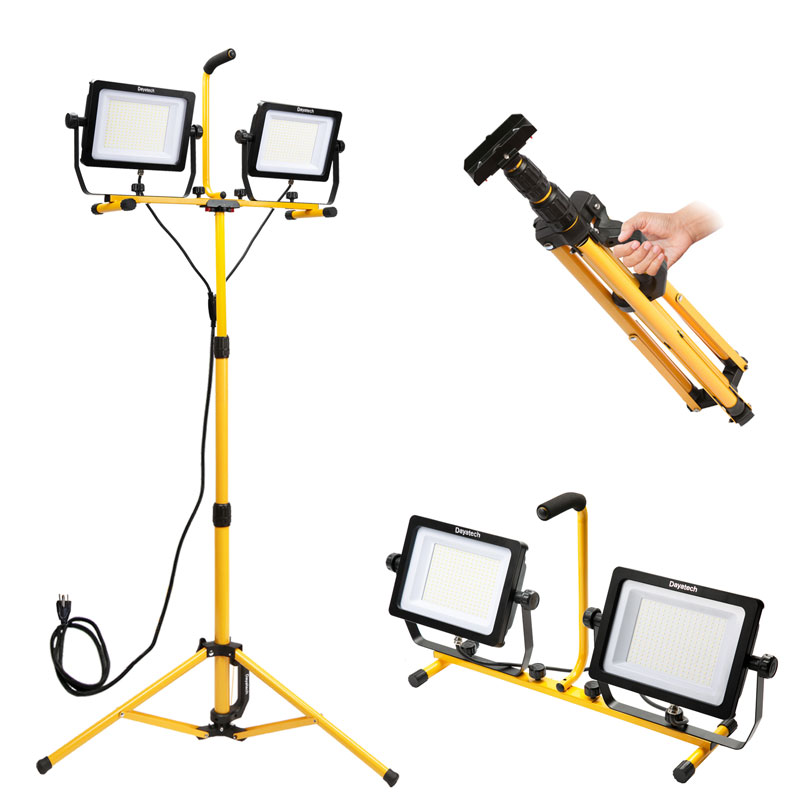
A tripod changes the working experience. By elevating the light source and supporting it on three legs, the illumination can be positioned above the immediate work surface and directed toward the area that needs attention. The worker can then keep both hands available for the task.
Dayatech describes its Tripod LED Work Light as a portable lighting solution with a sturdy tripod stand, adjustable positioning, bright LED bulbs, and a lightweight design intended for easy movement between locations. The product is positioned for garages, workshops, outdoor spaces, photography, videography, and other practical applications.
A three-leg structure helps create a stable base when the light is correctly positioned on a suitable surface.
Raising the light source can improve area coverage and reduce some shadows created by low-level lighting.
Workers can illuminate the task while keeping both hands available for tools and materials.
A foldable or easy-to-assemble tripod can make relocation between rooms, work areas, or job sites more convenient.
Key Features to Examine in a Tripod LED Work Light
Not every work light is designed for the same environment. A homeowner repairing a garage door may have different requirements from an electrician working on a commercial site. Instead of focusing on a single specification, buyers should consider how several characteristics work together.
1. Light Output
Lumen output indicates the total amount of visible light produced by a source. Higher lumen ratings can be useful for large or demanding workspaces, but brightness should always be considered together with beam distribution and working distance.
2. Adjustable Positioning
A bright light is less useful if it cannot be aimed correctly. Adjustable lamp heads and a height-adjustable tripod allow users to direct illumination toward ceilings, walls, machinery, floors, vehicles, or workbenches.
3. Tripod Stability
The tripod is not merely a stand. It is a major part of the product's usability. Look for a structure that opens securely, supports the lamp without excessive movement, and remains practical to transport.
4. LED Efficiency
LED technology is widely used in work lighting because it can provide strong illumination with comparatively efficient energy use and a long service life. Dayatech's product information highlights LED bulbs as a key part of its Tripod LED Work Light range.
5. Construction Quality
Job-site lighting is exposed to repeated movement, setup, storage, and handling. Protective lamp covers, reliable joints, robust tripod components, and quality materials can all contribute to longer practical service.
6. Portability
A work light that is powerful but difficult to transport can become inconvenient in real-world use. Consider folded size, overall weight, setup time, cable management, and whether the tripod can be moved without complicated disassembly.
How to Understand Brightness Without Overbuying
One of the most common mistakes when purchasing work lighting is assuming that the highest lumen number is automatically the best solution. In reality, excessive brightness can create glare, while insufficient brightness can make detailed work uncomfortable and inefficient.
The ideal output depends on the size of the area, the distance between the light and the work surface, the type of task, surrounding ambient light, and the required coverage. For example, detailed mechanical inspection may benefit from focused illumination, while construction work in a large unfinished room may require much broader coverage.
Dayatech's current Tripod LED Work Light category includes models listed at several output levels, including 5,000 lumen, 10,000 lumen, 15,000 lumen, 20,000 lumen, and 30,000 lumen products. This range illustrates why buyers should first identify the application before deciding on the required output.
Where Tripod LED Work Lights Are Useful
The versatility of tripod-mounted lighting makes it useful far beyond conventional construction. Its value comes from combining mobility, elevation, adjustable positioning, and strong illumination.
- Construction: Illuminate interior work areas, unfinished buildings, corridors, ceilings, and temporary job sites.
- Renovation: Provide additional lighting while painting, installing fixtures, repairing walls, flooring, or cabinets.
- Automotive work: Brighten garages, workshops, engine bays, vehicle interiors, and inspection areas.
- Electrical and mechanical maintenance: Improve visibility around equipment, machinery, control panels, and service areas.
- DIY projects: Provide dependable task lighting for home workshops and weekend projects.
- Emergency repair: Create temporary illumination when normal room lighting is unavailable.
- Photography and video: Provide an elevated artificial light source when a portable lighting setup is needed.
- Outdoor work: Support evening maintenance, events, temporary work areas, and other applications requiring movable illumination.
The ability to reposition the light is especially valuable when a project changes from one stage to another. Instead of installing permanent lighting for a temporary task, users can simply move the tripod and redirect the lamp.
What to Check Before Buying a Tripod LED Work Light
A good purchasing decision starts with the job rather than the product label. Before placing an order, consider the following questions.
- How large is the area that needs illumination?
- Will the light be used indoors, outdoors, or in both environments?
- Does the job require broad flood illumination or more directed light?
- How often will the light be transported?
- What working height is required?
- Will users frequently adjust the lamp angle?
- Does the light need to be stored in a compact space?
- What power supply arrangement is most practical for the intended application?
- Does the product need to meet particular customer, project, or market requirements?
- For wholesale buyers, are packaging, quantities, specifications, and customization requirements clearly defined?
These questions can prevent a surprisingly common problem: purchasing a technically impressive work light that does not fit the actual workflow.
Practical Specification Guide for Different Work Environments
| Application | Useful Characteristics | What to Prioritize |
|---|---|---|
| Home DIY | Portable, simple setup, adjustable | Convenience and manageable size |
| Garage Work | Strong area lighting and stable support | Brightness, positioning, durability |
| Construction | Wide coverage and elevated lighting | Output, stability, rugged construction |
| Mechanical Maintenance | Adjustable beam direction | Positioning flexibility and brightness |
| Outdoor Work | Portable and easy to reposition | Durability and practical power arrangement |
| Photography / Video | Adjustable height and light direction | Positioning control and consistent illumination |
| Wholesale Supply | Consistent specifications and scalable supply | Manufacturer capability, product range, service |
Common Buying Mistakes That Can Reduce Lighting Performance
Choosing Brightness Without Considering Coverage
A high lumen rating alone does not guarantee good illumination. Beam distribution, mounting height, distance, and lamp direction all influence how much useful light reaches the work surface.
Ignoring Tripod Quality
Buyers sometimes concentrate entirely on the LED head and overlook the support structure. A light used on a job site needs a tripod that can be opened, adjusted, relocated, and stored conveniently.
Buying for the Largest Possible Job
Oversized equipment can increase transportation and storage difficulties. If most tasks involve a small workshop, buying the largest available model may not provide the best overall experience.
Forgetting Maintenance Requirements
Even durable equipment needs proper handling. Dust, moisture, impacts, damaged cables, loose joints, and improper storage can reduce product life.
Failing to Confirm Product Details
For professional or wholesale purchases, specifications should be confirmed before ordering. Buyers may need information about wattage, lumen output, dimensions, materials, power configuration, packaging, certifications, sample availability, and production requirements.
How to Maintain a Tripod LED Work Light
Proper maintenance is straightforward, but it can make a significant difference to long-term reliability.
- Keep the lamp surface clean so accumulated dust does not interfere with illumination or heat dissipation.
- Inspect the tripod legs and adjustment points before demanding applications.
- Do not force height or angle adjustments beyond the product's intended range.
- Store the light in a dry and protected location when it is not being used.
- Protect cables and connectors from unnecessary bending, crushing, or pulling.
- Allow the equipment to cool appropriately before compact storage if the operating conditions have caused significant heat buildup.
- Check the lamp cover and housing for visible damage after accidental impacts.
- Use the product according to the manufacturer's instructions and specified operating conditions.
These basic habits are particularly important for contractors and businesses where work lights are repeatedly transported between different projects.
Why Consider Ningbo Dayatech Technology Co., Ltd.?
For buyers sourcing work lights for professional use, retail distribution, project supply, or wholesale applications, the manufacturer behind the product matters as much as the individual specification.
Ningbo Dayatech Technology Co., Ltd. presents itself as a professional Tripod LED Work Light manufacturer and supplier in China, with its own factory and a range of related LED work-light products. Its current product category includes multiple tripod models, including dual-head products and models listed with different lumen and wattage configurations.
The company's product range also includes rechargeable LED work lights, portable LED work lights, foldable work lights, cordless LED work lights, LED flood lights, and other lighting products. This broader range can be useful for distributors or project buyers who need more than one type of portable lighting solution.
The official product page also highlights the company's ability to support wholesale purchasing and provides product information for buyers who want to compare different configurations. For project-specific requirements, the most practical approach is to communicate the intended application, expected quantity, target specifications, and market requirements directly with the supplier.
You can learn more about the manufacturer and send a product inquiry through contact Ningbo Dayatech Technology Co., Ltd..
Frequently Asked Questions About Tripod LED Work Lights
A Tripod LED Work Light is a portable lighting system that combines an LED lamp with a three-legged support structure. The tripod raises the light and allows it to be positioned at a useful height and angle.
A tripod provides elevated, hands-free illumination. It can also make it easier to reposition the light as the work area changes, helping users avoid relying on unstable surfaces or handheld lighting.
The appropriate lumen output depends on the size of the workspace, working distance, task type, ambient lighting, and desired coverage. More lumens are not automatically better if they create excessive glare or are unnecessary for the application.
Yes. Their elevated position, portability, and adjustable lighting direction make them useful for construction, renovation, maintenance, and other temporary work environments.
Yes. A tripod-mounted LED light can provide additional illumination for automotive repair, woodworking, inspection, cleaning, and general garage projects.
Wholesalers should examine product consistency, specifications, production capacity, packaging, compliance requirements, sample procedures, lead times, communication, and after-sales support in addition to the advertised light output.
Not necessarily. Wattage indicates electrical power consumption, while lumens describe the amount of visible light produced. Product efficiency, LED technology, optical design, and beam distribution also affect real-world performance.
Store it in a dry, protected location after use. Keep the tripod folded or secured according to the manufacturer's instructions, protect cables from damage, and avoid placing heavy objects on the lamp or tripod components.
In many cases, yes. Adjustable height and lamp positioning make tripod lighting adaptable to garages, workshops, construction areas, outdoor projects, maintenance tasks, and other temporary workspaces.
Buyers can visit the official Tripod LED Work Light product category or contact Ningbo Dayatech Technology Co., Ltd. directly to discuss specifications, quantities, applications, and purchasing requirements.
Light Up the Work That Matters
The right Tripod LED Work Light can turn a poorly illuminated workspace into a more practical, comfortable, and productive working environment. Whether you are purchasing for a workshop, construction project, professional maintenance team, retail business, or wholesale distribution, choosing the right combination of brightness, stability, portability, adjustment, and durability is the key to getting lasting value from your lighting equipment.
Explore the Tripod LED Work Light range from Ningbo Dayatech Technology Co., Ltd. and discuss your project requirements with the manufacturer. For product specifications, wholesale inquiries, or tailored lighting solutions, contact us today.
Contact Ningbo Dayatech Technology Co., Ltd.